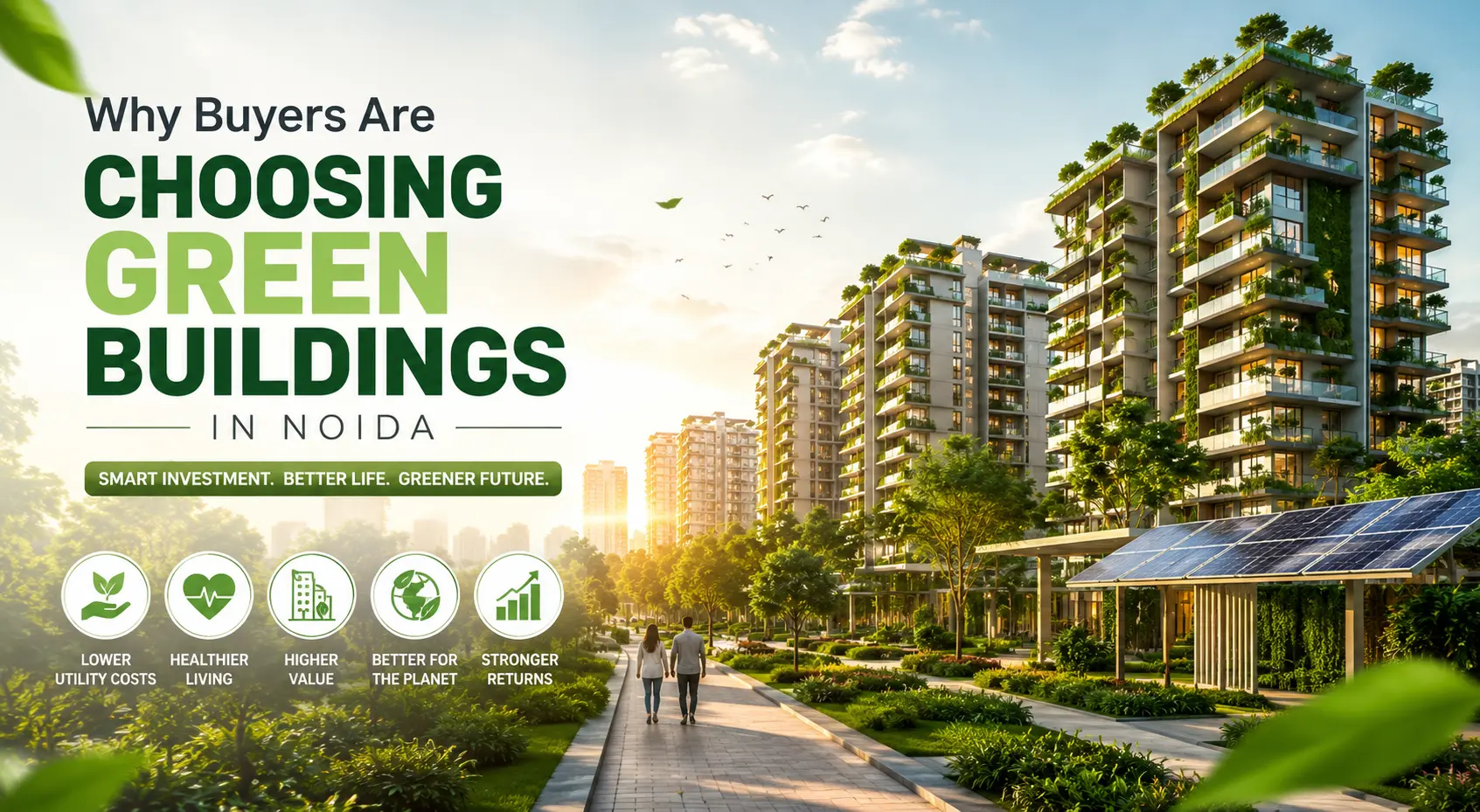
Ask a homebuyer today what matters to them, and you'll notice the conversation has shifted. It's not just about square footage or which floor gets the best view anymore. People want to know how much they'll actually spend running the place, whether the air inside is any good for their kids, and whether the property will still be desirable ten years from now. That shift is exactly why green buildings have started winning over buyers across Noida, the Noida Expressway, Greater Noida West, and Yamuna Expressway.
Developers have picked up on this too. What used to be a sustainability checkbox on a brochure is now something buyers actually ask about — because they've realized eco-friendly construction isn't just good for the planet, it's good for their wallet.
So if you're weighing a luxury apartment in Noida, eyeing a 3 BHK, or looking at commercial space as an investment, it's worth understanding what a "green building" actually means and why it's become such a big part of the buying decision.
What Actually Makes a Building "Green"?
At its core, a green building is simply one designed to use less — less energy, less water, fewer resources — without asking residents to compromise on comfort. It's less about how the building looks and more about how efficiently it runs over its lifetime.
In practice, that usually shows up as:
Energy-efficient lighting and HVAC systems
Rainwater harvesting
Water recycling
Better ventilation and indoor air quality
Solar power integration
Sustainable building materials
Smarter waste management
In India, certifications like IGBC, GRIHA, and LEED exist specifically so buyers don't have to take a developer's word for it — they're a way to verify that a project actually meets recognized sustainability benchmarks, rather than just claiming to.
The Real Reason Buyers Trust Green Homes: Lower Bills
Here's the part that tends to seal the deal for most buyers — green-certified homes genuinely cost less to run. Better insulation, smarter lighting, and more efficient cooling systems add up, and studies suggest these buildings can cut energy consumption by roughly 30–40% compared to conventional ones.
For anyone buying a ready-to-move property in Noida or a premium apartment, that's not a small thing. Lower utility bills month after month make ownership meaningfully more affordable over time — it's the kind of saving that compounds quietly in the background.
Better Resale Value Is Hard to Ignore
Anyone thinking like an investor knows that today's purchase price is only half the story — what matters just as much is what happens when you sell.
This is where green buildings pull ahead. Research in India points to green-certified properties commanding 10–15% higher resale values than comparable conventional ones, largely because demand for sustainable homes keeps climbing. For buyers scouting the best investment property in Noida, that resale premium can meaningfully shape long-term returns.
It's Not Just About the Environment — It's About How You Feel at Home
There's also a wellness angle that's easy to underestimate until you've lived it. Green buildings tend to offer noticeably better indoor air quality, more natural light, stronger ventilation, and less indoor pollution overall.
For families, working professionals, and especially senior citizens, that translates into a home that simply feels better to live in — day to day, not just on paper.
Why Noida's Green Building Boom Is Happening Right Now
The Noida Expressway has quickly become one of the most sought-after premium corridors in the NCR, and developers building there know buyers now expect more than luxury finishes — they expect projects to be efficient for the long haul.
Sectors like 97, 98, 94, and 150 are seeing a real uptick in interest from buyers specifically looking for future-ready homes that combine premium living with genuinely sustainable design. Whether it's a project like M3M Jewel Crest Avenue, M3M The Cullinan, Sobha Rivana, or Godrej Riverine, green infrastructure has quietly become part of the conversation buyers are having before they sign anything.
Businesses Are Making the Same Calculation
This isn't a residential-only trend. Companies leasing or investing in commercial space are drawing the same conclusions — green-certified buildings mean lower operating costs, more comfortable workspaces for employees, stronger sustainability credentials to point to, and better long-term asset value. India's commercial real estate market has seen a real jump in green-certified space in recent years, driven by demand from both occupiers and investors alike.
Questions Worth Asking Before You Buy
Before you commit to any project, it's worth pushing past the marketing language and asking directly:
Does the project actually hold IGBC, GRIHA, or LEED certification?
Is there a working rainwater harvesting system?
Are the energy-efficient systems installed, or just planned?
Is there a real water recycling setup?
What can residents realistically expect to save on maintenance and utilities?
These are the questions that separate a genuinely sustainable project from one that's simply using the word "green" as a selling point.
Where This Is All Heading
As India's cities keep growing, green buildings are moving from "nice to have" to genuinely expected — pushed along by government sustainability targets, buyers who are more informed than ever, and developers who've realized this is no longer optional.
If you're searching for luxury apartments in Noida above 3 crore, ultra-luxury flats near the Noida Expressway, or simply the best investment property in Noida, a green-certified project is worth serious consideration. It tends to mean lower running costs, stronger resale potential, and a lot more peace of mind about the decision you're making.
Why Choose Propseekers Realty?
At Propseekers Realty, we help buyers find premium residential and commercial properties across Noida, the Noida Expressway, Greater Noida West, and Yamuna Expressway. Whether you're after a 3 BHK luxury apartment, a ready-to-move home, or a commercial investment with strong returns, our team can guide you toward projects that offer real long-term value — sustainability included.